What BS EN 1263, CSCS FASET-trained riggers and IPAF access mean when you specify fall-arrest nets.
If you specify safety netting in the UK, FASET membership is the practical test of whether the installer will follow the same rulebook as the rest of the reputable market. Onestop has provided nets for more than 20 years. All of our safety net and roof edge protection riggers are CSCS FASET trained and employed directly by us — not a chain of labour-only gangs who change from job to job.
Why collective arrest still matters
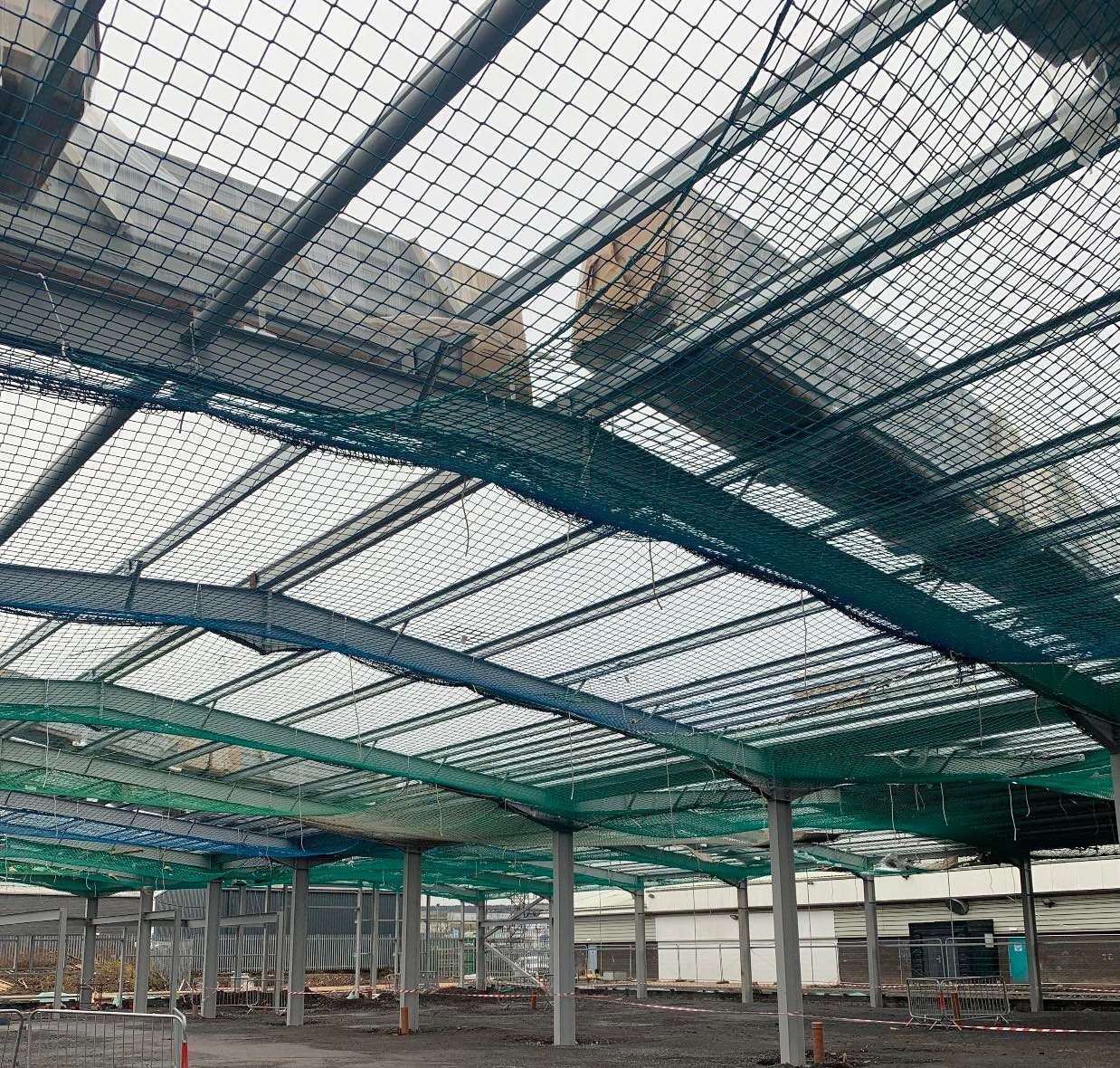
A net under an open roof or steel frame is collective fall arrest. It gives roofers, sheeters and follow-on trades a last line of defence while they work above, without every person being clipped to a personal line. That keeps the roofing package moving. Personal systems have their place on finished roofs; they are a poor way to protect a full gang on an open frame.
See a typical layout in our steel-frame safety netting case study.
The standards that sit behind a net
As a FASET member, Onestop works to the following:
- Netting must conform to BS EN 1263-1
- It must be rigged in accordance with BS EN 1263-2
- Riggers should be trained to CSCS FASET level
- Riggers should hold current IPAF certification where MEWPs are used
- Toolbox talks keep the method current on live jobs
FASET publishes free safety netting guidance. Using it, and using a member who employs riggers directly, reduces the chance of a net that looks right from the ground but is not tensioned or tied as the standard requires. A slack net, an oversized gap at the eaves, or a tie that cannot take the load is not a paperwork issue — it is a failed system.
Nets plus the edge
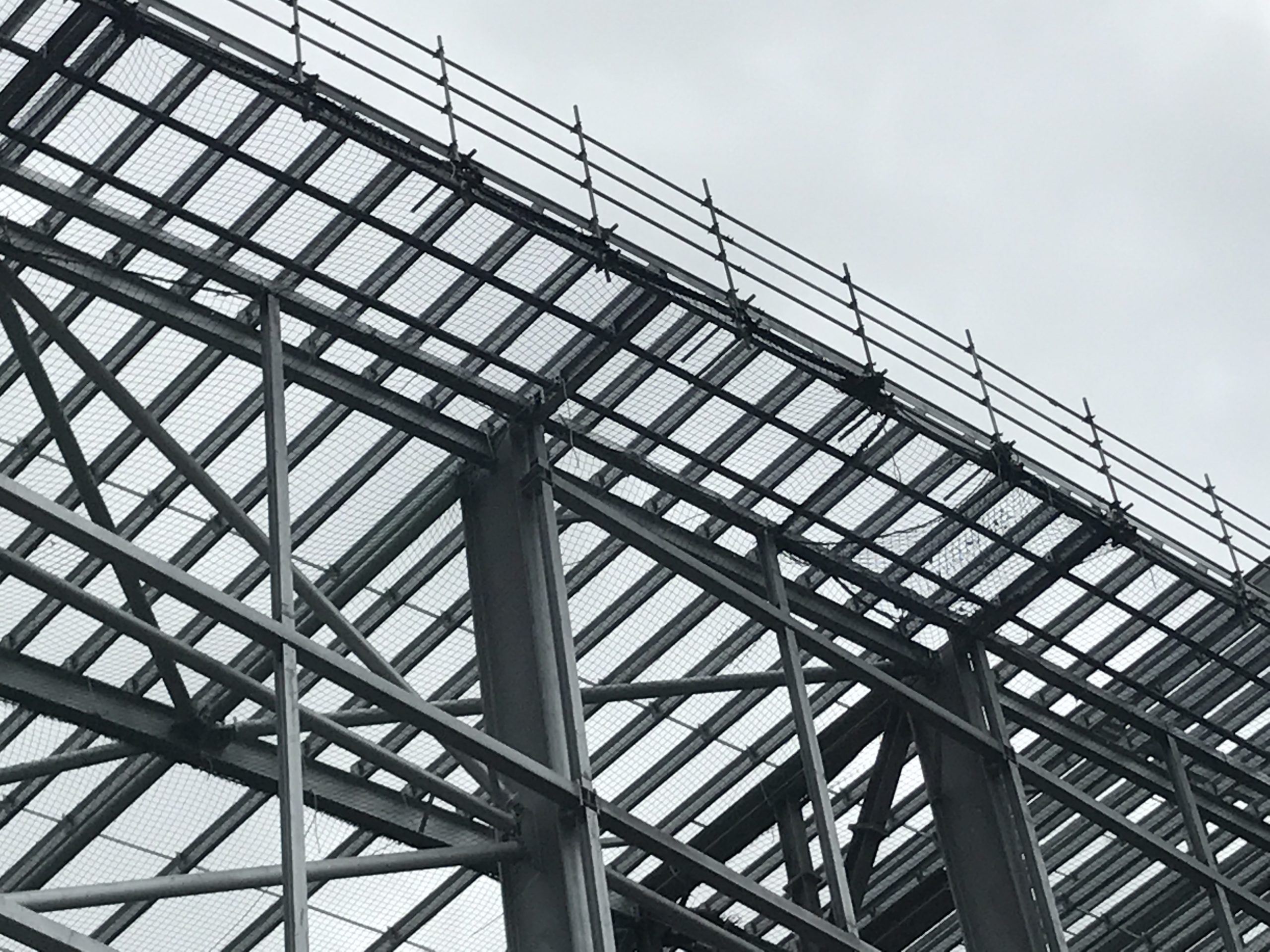
A net under the steel does not replace a physical barrier at the eaves. Anyone working at the leading edge still needs something to stop them walking off the frame. We typically combine nets with edge protection to BS EN 13374, and, where the public or a live workplace sits below, protective debris netting.
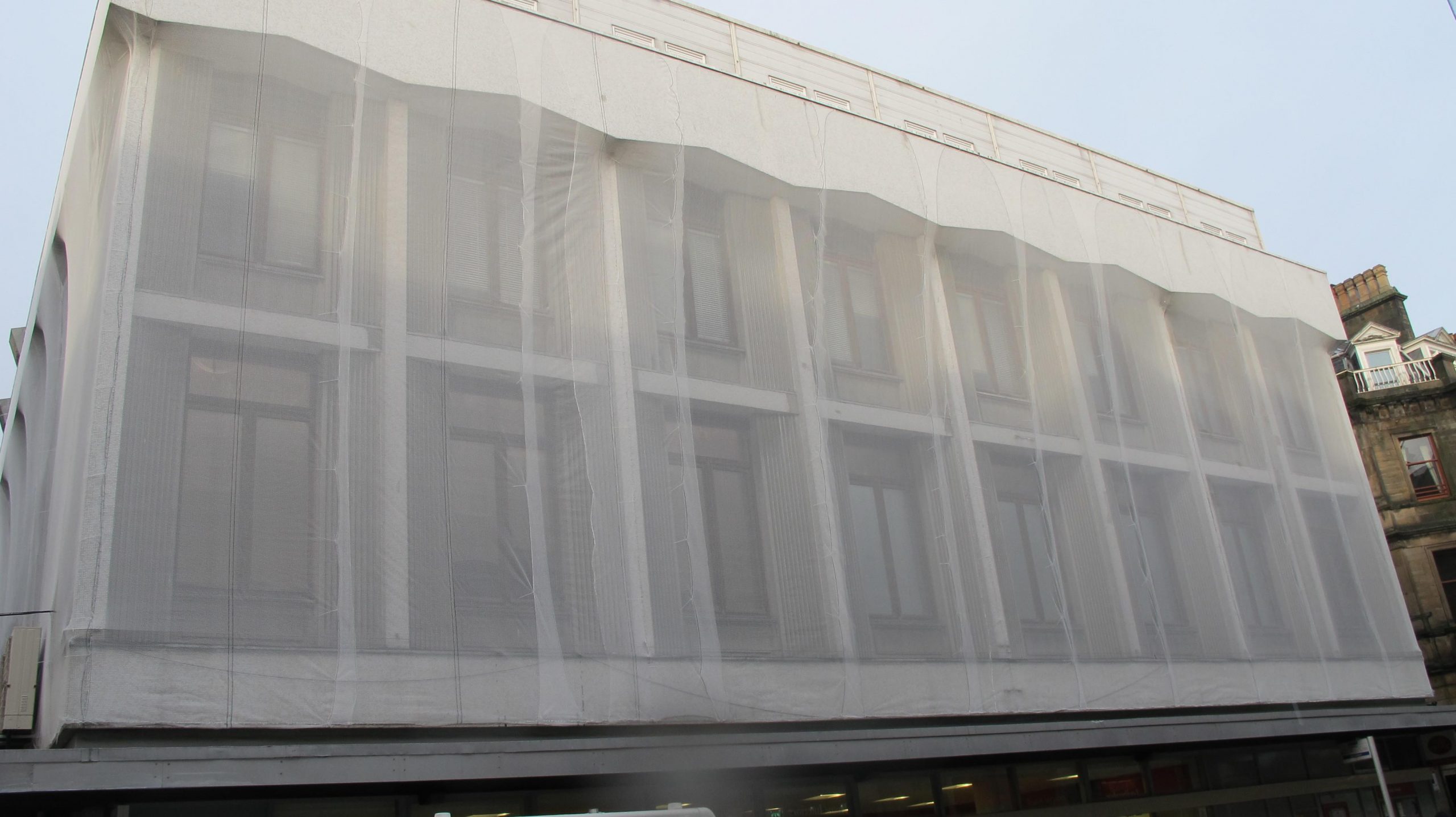
Debris mesh is a containment layer. It does not replace fall-arrest netting. Specifying one without the other on an occupied site is a common gap. Facade wrap is used where the risk is at the elevation rather than the roof soffit.
Access for the riggers themselves
Nets have to be installed from somewhere. Improvised platforms and climbing the steel are not a method. Our riggers hold current IPAF certification and we use towers and mobile elevating work platforms so the install is planned as temporary works, not as an afterthought. That matters on occupied buildings, where a MEWP in a customer car park still has to be agreed, but a scaffold crash deck may be worse.
What to ask a netting contractor
Before you place an order, ask:
- Are the riggers CSCS FASET trained and employed by the company named on the RAMS?
- Will the nets be BS EN 1263-1 product, rigged to BS EN 1263-2?
- Who inspects the nets while they remain in for the duration of the works?
- How is the leading edge closed — nets alone, or nets plus edge protection?
If those answers are vague, the price on the quote is not the risk. Read working at height on occupied buildings if the site below cannot close, then ask for a programme-led survey.