How to choose collective rooftop guardrail versus a Latchways Constant Force personal lifeline for plant access and maintenance.
Two competent systems can both be “roof safety” and still be the wrong choice for the same building. A VersiRail-style guardrail and a Latchways Constant Force line solve different problems. The Work at Height Regulations ask you to consider collective prevention first. That does not mean a rail is always reasonably practicable, and it does not mean a lifeline is a cheaper equivalent.
Choose a guardrail when
- People go near the edge often, including mixed contractors who will not all be harness-trained
- You want a system that works without clipping on
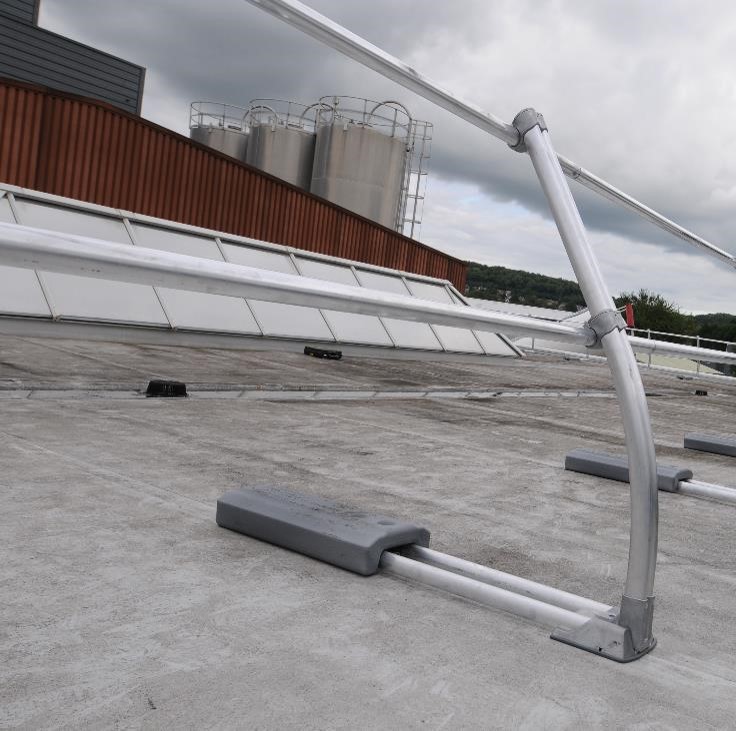
- The roof can take a free-standing counterweighted rail, or a structural fix into a parapet or upstand
- Sightlines and planning allow a visible barrier
- The area is a thoroughfare — plant access, smoke vents, PV arrays, or a route used by more than one trade
Collective prevention is what facilities teams and roofing contractors both benefit from when the edge is simply closed. Free-standing systems protect single-ply and membrane roofs without penetrating the waterproofing. Fixed rails suit parapets, mezzanines and plant enclosures. Folding and curved rails exist where a sightline or a crane lift still needs a clear edge on some days.
A rail still needs inspection. Weights get moved. Posts get used as tying-off points they were not designed for. Specify the inspection with the install.
Choose a Constant Force line when
- Access is occasional and a full rail is not reasonably practicable
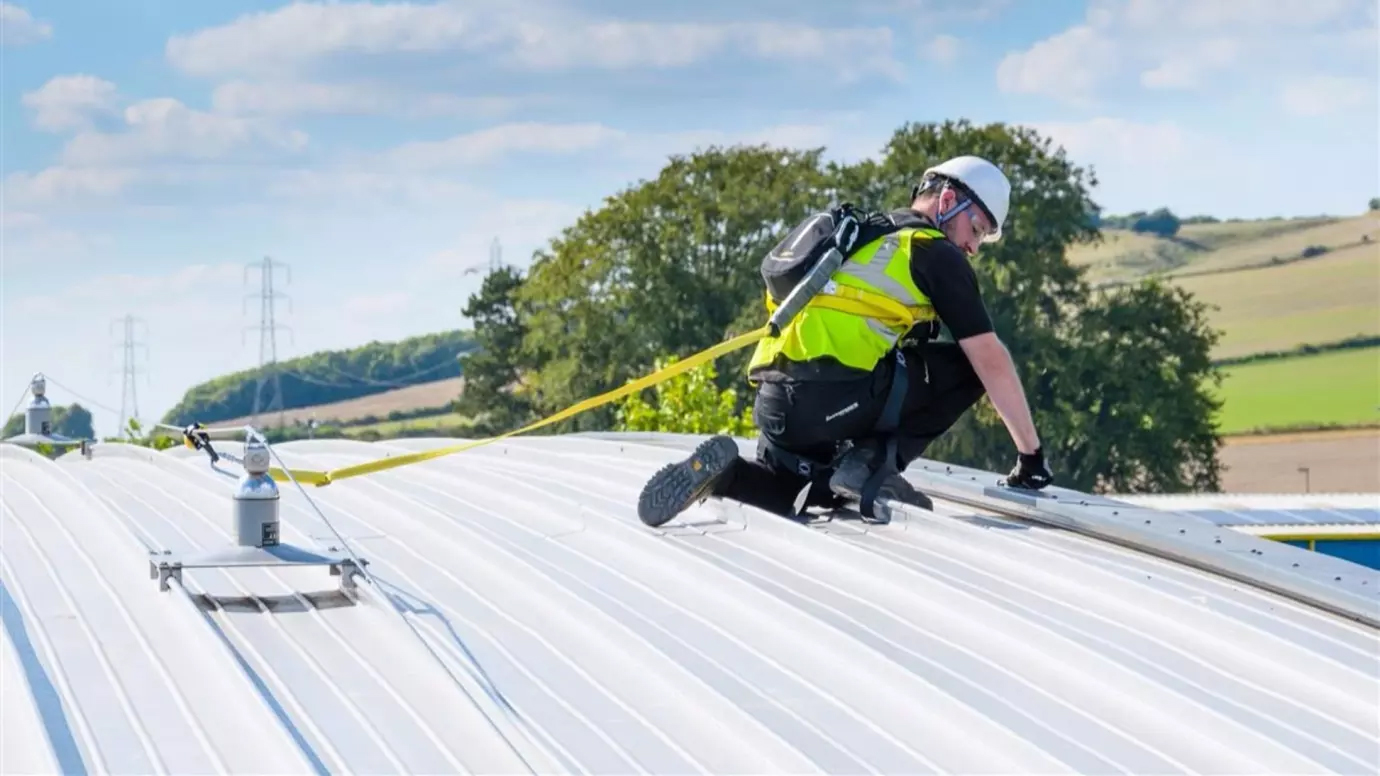
- The covering is standing-seam, membrane or profiled metal that needs an energy-absorbing post so a fall does not wreck the roof
- Users can be trained, equipped and supervised
- You still need hands-free travel along a planned route, for example gutter cleaning or plant that sits away from a safe parapet
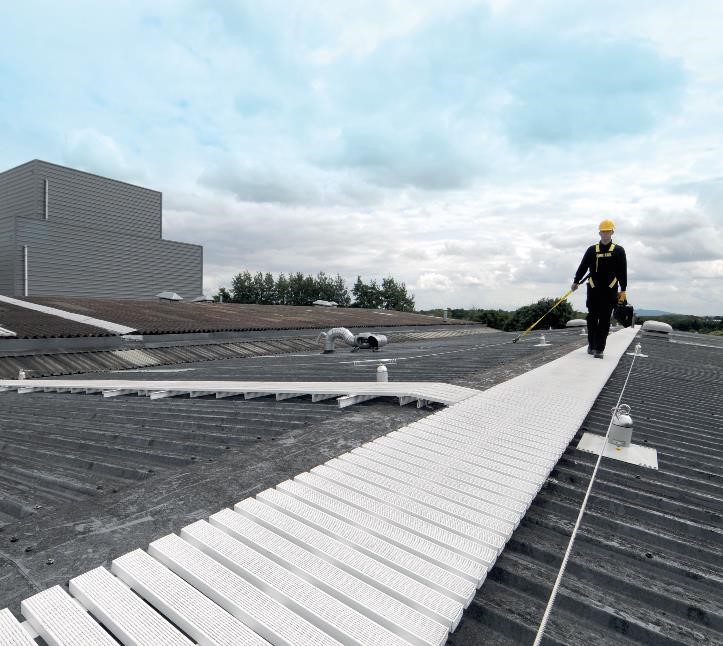
A line is only as good as the people clipped to it. If the roof is a thoroughfare, add a walkway and consider rail at the eaves even if a lifeline serves the plant. Our profiled metal roof lifeline case study is the occasional-access pattern. Our rooftop walkway study is what happens when FM attends often enough that a painted line on the sheets is not enough.
The hybrid that most occupied roofs actually need
A common, durable specification is:
- A defined anti-slip walkway to the plant
- Guardrail where the route runs near an open eaves
- A Constant Force spur or loop where someone must step off the deck
That combination matches how roofs are really used. Contractors follow the path. Trained operatives clip on for the exception. Nobody is asked to traverse an entire covering on a lanyard because the original quote only allowed for posts.
We specify both
Onestop is an approved Latchways installer and an installer of VersiRail-type rails. The survey decides, not the product catalogue. We will tell you if a rail is the better spend, and we will tell you if the covering and the visit frequency point to a personal system.
For the legal framing behind the choice, read fall prevention vs fall protection, then book a survey.